

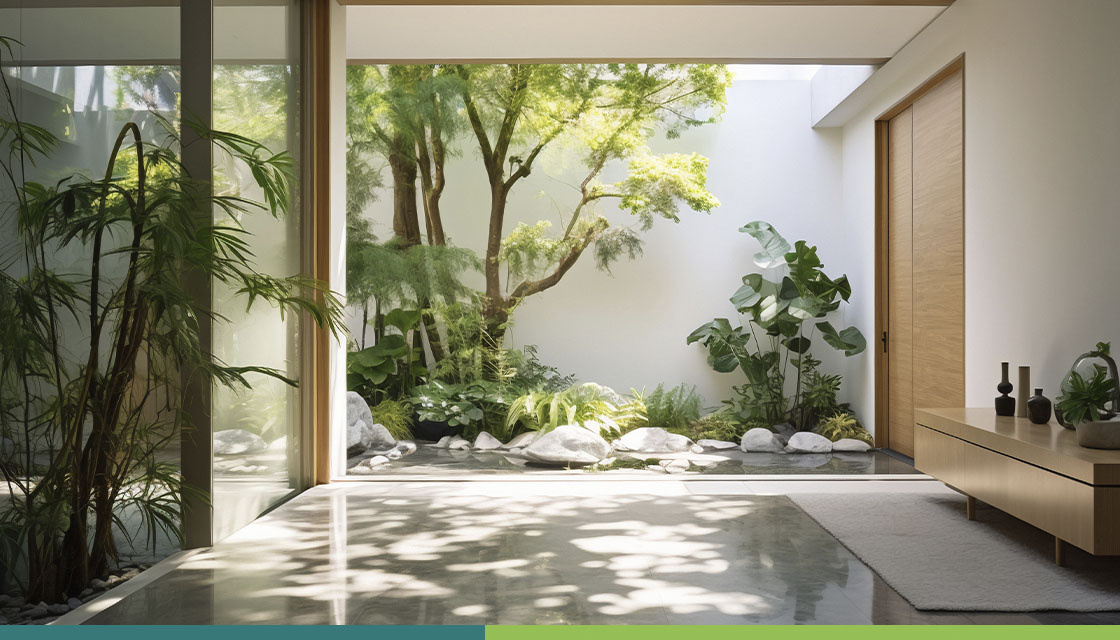
Indoor green spaces in homes have become a very popular design choice to make the living space healthy and refreshing. They can be integrated into your home with potted plants, vertical gardens, or indoor courtyards. Adding greenery into the home leads to a number of benefits. Each design element also has some drawbacks that must be weighed thoughtfully. The understanding of both advantages and disadvantages aids a homeowner in creating spaces that are not only beautiful but also practical and sustainable.
Indoor Green Space: Benefits
1. Improved Air Quality
Another very valuable advantage provided by indoor greenery is air quality enhancement. Most plants serve as natural filters of such air pollutants as carbon dioxide, formaldehyde, and airborne toxins. These plants increase oxygen levels while reducing harmful particles, therefore contributing to a healthier atmosphere indoors. This may be particularly helpful in urban areas, where the outdoor air quality is compromised.
2. Improved Psychological Well-being
Indoor plants have been known to help improve one’s mental well-being. The greenery gives a soothing effect, cuts down on stress, and improves moods. These plants may also inspire creativity and give better concentration to people working or studying at home. The indoor green spaces naturally act as an escape for city dwellers or people living in a high-pressure environment from the daily hustle and bustle that causes them stress.
3. Improved Aesthetic Value
Green spaces add an aesthetic warmth and vibrancy to indoor environments. They come in different styles that fit various concepts, from minimalist, modern, and rustic themes. Either vertical gardens, terrariums, or small indoor trees can give great character to the home. Greenery can soften harsh architectural lines to make the space inviting.
4. Natural Humidity Regulation
Most indoor plants release their moisture into the air, which has a humidifying effect. This can come in quite handy for dry climates or during seasons when indoor air becomes unbearably dry because of air conditioning and heating systems. Humidity maintained at an optimal level favors respiratory health and reduces the adversities associated with dry skin or irritated sinuses.

Indoor Green Spaces: Disadvantages
1. Maintenance Requirements
Indoor plants do have the drawback of requiring regular maintenance. From watering and pruning to controlling pests and receiving adequate sunlight, the care for greenery is pretty intensive. Sometimes, if the plants are forgotten, they wither, grow mold, or even spread infestations that may affect the quality of the surrounding air.
2. Food Allergens
Some plants emit pollen or fragrances that may irritate people with allergies. More importantly, damp soils are often a source of mold proliferation when not taken care of adequately. For this reason, plants should be selected with great care according to a person’s health status and climate indoors.
3. Space Limitations
Smaller homes or apartments sometimes do not allow easy space to be devoted to greenery. Large plants or indoor gardens may require significant floor area, which can make compact rooms crowded. The balance between the greenery and free space has to be found to maintain practicality.
4. Risk of Interiors Getting Damaged
Watering indoors inherently carries the risks of spills, leaks, or overflows that could ruin floors or furniture. Then, some plant species have quite aggressive roots, which may crack pots or disturb built structures over time.

Concluding Observations
Indoor green space marries beauty, health, and emotional comfort. They also demand careful planning, proper maintenance, and thoughtful plant selection. It is by weighing the pros and cons that a homeowner will create indoor environments that foster well-being yet remain functional and manageable. Indoor greenery can change any home into a fresh, uplifting sanctuary with the right approach.

