

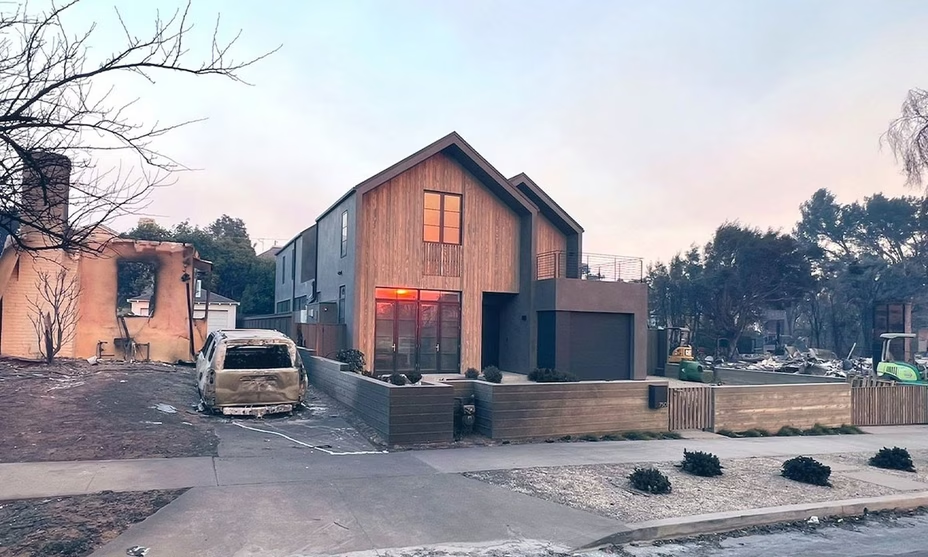
Wildfires are a grim fact of life in California now. Every year, homes burn, families lose everything, and entire streets disappear overnight. But out of all that destruction, one story grabbed everyone’s attention: a Passive House that made it through a massive wildfire when every other home around it was wiped out.
This isn’t just about a building still standing after the flames died down. It’s a wake-up call. Architecture doesn’t just shape how we live — sometimes, it’s the reason we get to keep living at all.
So, What’s a Passive House, Really?
If you want to know why this house survived, you’ve got to get what makes a Passive House different.
At its core, a Passive House is built to be super energy-efficient and comfortable, thanks to smart design choices, not just fancy gadgets. Instead of blasting AC or heat all day, it keeps temperatures steady inside with thick insulation, airtight construction, and top-notch windows and doors.
Here’s the twist: all those features that save energy also make these houses surprisingly tough when the worst happens — even against wildfires.
The Only House Left After the Fire

The house sat right in the wildfire’s path. Flames raced through, the heat spiked, and embers flew everywhere. The scene was chaos.
Afterward, when people walked through the neighborhood, the difference was almost hard to believe. Nearly every house was gone — but the Passive House stood there, mostly unharmed, with just a few scars on the outside.
Why did this house survive when everything else didn’t?
Design Choices That Made All the Difference
Fire-Resistant Materials
First off, the builders didn’t mess around with the basics. They used tough, non-combustible stuff for the exterior. The walls held up against the heat, slowing the fire and stopping it from chewing through the house’s bones.
These weren’t just random choices for looks or durability — the whole point was to keep people safe if disaster struck.
Airtightness: The Invisible Armor
Here’s something most people don’t think about. Passive Houses are famous for being airtight — no drafts, no leaks. In a regular house, smoke and embers sneak in through tiny cracks. In this one, the airtight build acted like a force field.
Smoke barely got inside. Embers couldn’t find a way in to spark a new fire. The damage stayed on the outside, where firefighters could deal with it.
Super-Strong Windows
Windows usually give out first in a fire. Ordinary glass pops and shatters, and suddenly flames are inside your living room.
Not here. This house had multi-layered, tough-as-nails windows built to handle wild temperature swings. They stayed intact, keeping the fire out.
Smart Landscaping
The team even thought about what was around the house. No big patches of dry grass or piles of wood stacked up against the walls. By keeping flammable stuff away, they gave the house an extra layer of safety. That simple move bought the building precious minutes.

More Than Just Saving Energy
People usually talk about Passive Houses in terms of eco-friendliness and lower bills. That’s great, but this story shows there’s a lot more at stake. Sometimes, designing for efficiency is actually designing for survival.
With climate change fueling bigger, meaner disasters, resilience isn’t just a nice bonus anymore. It’s essential. Architects have to think about comfort and style, sure, but also about keeping people safe.
A Reality Check for Designers and Homeowners
For architects, this proves a point: design carries real responsibility. It’s not just about how something looks — it’s about what it does when things go wrong.
For anyone thinking about building or buying, there’s a takeaway too. Spending a bit more on smart design and solid materials can save everything you care about when life gets unpredictable.
At the end of the day, a home isn’t just somewhere to sleep. It’s supposed to protect you.
Why Everyone Noticed
This story went viral for a reason. People are worried about wildfires and climate disasters. They’re looking for hope, for proof that we can actually do something about it. Here’s a clear example: smart design saves homes — and lives.
So, the story spread. People shared it on the news, in architect circles, all over social media.
What’s Next: Building for the Real World
The fact that this Passive House survived wasn’t luck. It was

