

An en-suite bathroom, created within a specific design framework relative to the entire house, is not just about convenience; it’s a form of investment in comfort and appeal, as well as long-term real estate value. With the rise of modern interior design focused on personal touches and efficient space utilization, the strategic location and design of an internal bathroom have become one of the important facets of residential planning. The feeling one gets from an en-suite bathroom should be one of deliberateness, continuity, and functionality, not that of an afterthought.
Understanding Spatial Harmony
Before designing an en-suite bathroom, one needs to take into consideration the home’s current layout. The bathroom should enhance the structure, not disturb it. In a generally rectangular or narrow house, for example, an ideal spot for a bathroom would be near the corner or along the shared walls from inside, so that plumbing routes are minimized. Meanwhile, homes that have more flexible floor plans can place the bathroom behind the bed area or partition it with sliding doors to maximize privacy.
The bathroom and bedroom should be in harmony with each other. For this, accessibility, ventilation, and visual cohesion should be pre-planned to maintain balance and comfort.
Choosing Suitable Materials
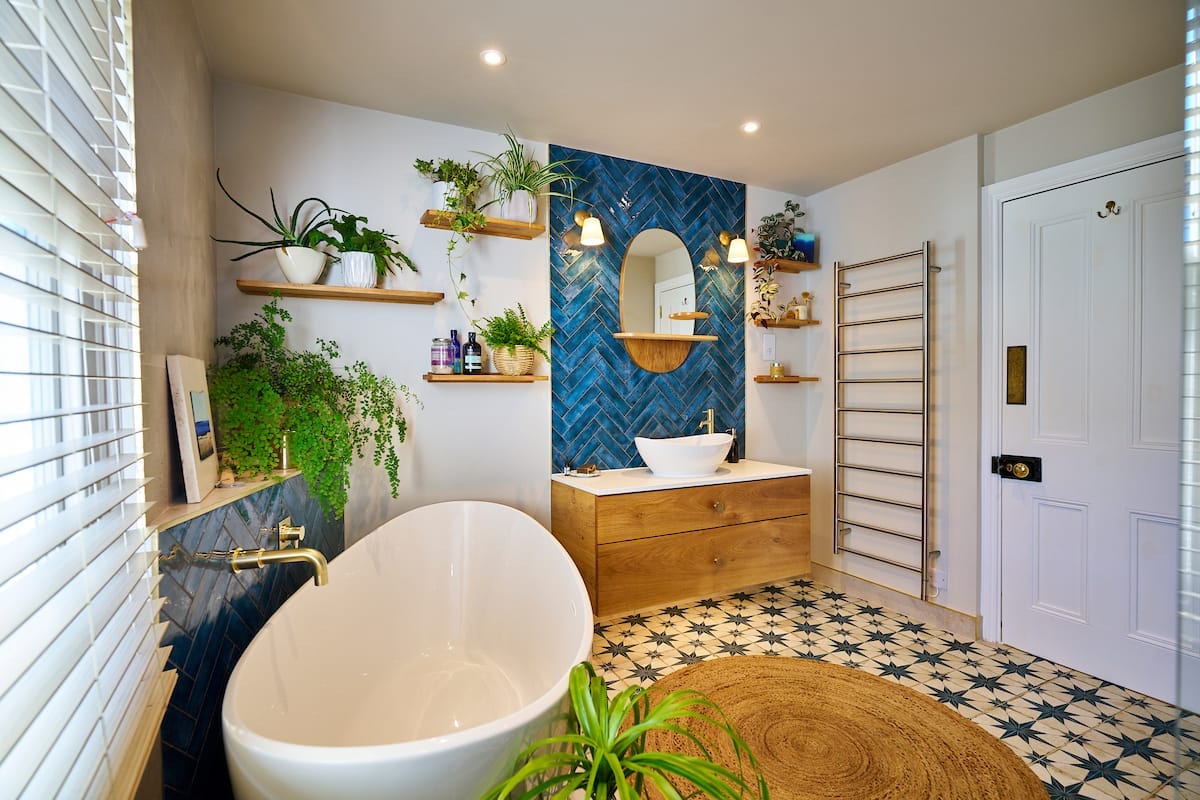
The style of the home is also matched in the bathroom through material selection. Most modern homes use minimalist finishes: matte tiles, neutral color palettes, and hidden storage systems. In traditional homes, natural stone, warm woods, and decorative fixtures can continue the character of the house.
Whatever the design style, the materials will need to be durable, water-resistant, and easy to maintain. Again, flooring is very important. Non-slip ceramic tiles or sealed concrete confer safety and durability. On the walls, waterproof paints or tiles avert mold formation and increase durability.
Lighting and Ventilation Considerations
Since the bathroom may sometimes be internal, it needs good ventilation to avoid staleness or a build-up of odors. This helps in reducing humidity and can save surrounding bedroom walls from potential damage. If possible, a small window or skylight will add brightness naturally and much greater comfort. Illumination should also support both functionality and ambiance. A layered lighting strategy will create a relaxing yet practical atmosphere, such as task lighting for mirrors and softer ceiling lights.
Prioritizing Privacy and Noise Control
Since the bathroom adjoins a private living space, privacy must be addressed thoughtfully. The use of soundproof doors, strategic placement of plumbing, and materials that reduce echo helps avoid noise disturbance. Frosted glass, partition walls, or sliding doors can give separation yet still provide visual flow.
Conclusion
The construction of an en-suite bathroom, which follows the shape and style of the home, requires tactful planning, balance, and attention to detail. If done correctly, it improves day-to-day comfort, enhances functionality, and appeals to the general aesthetic value of the property. To modern homeowners, this is not just a luxury but a practical feature that complements lifestyle needs, adding to the living experience of the home.