

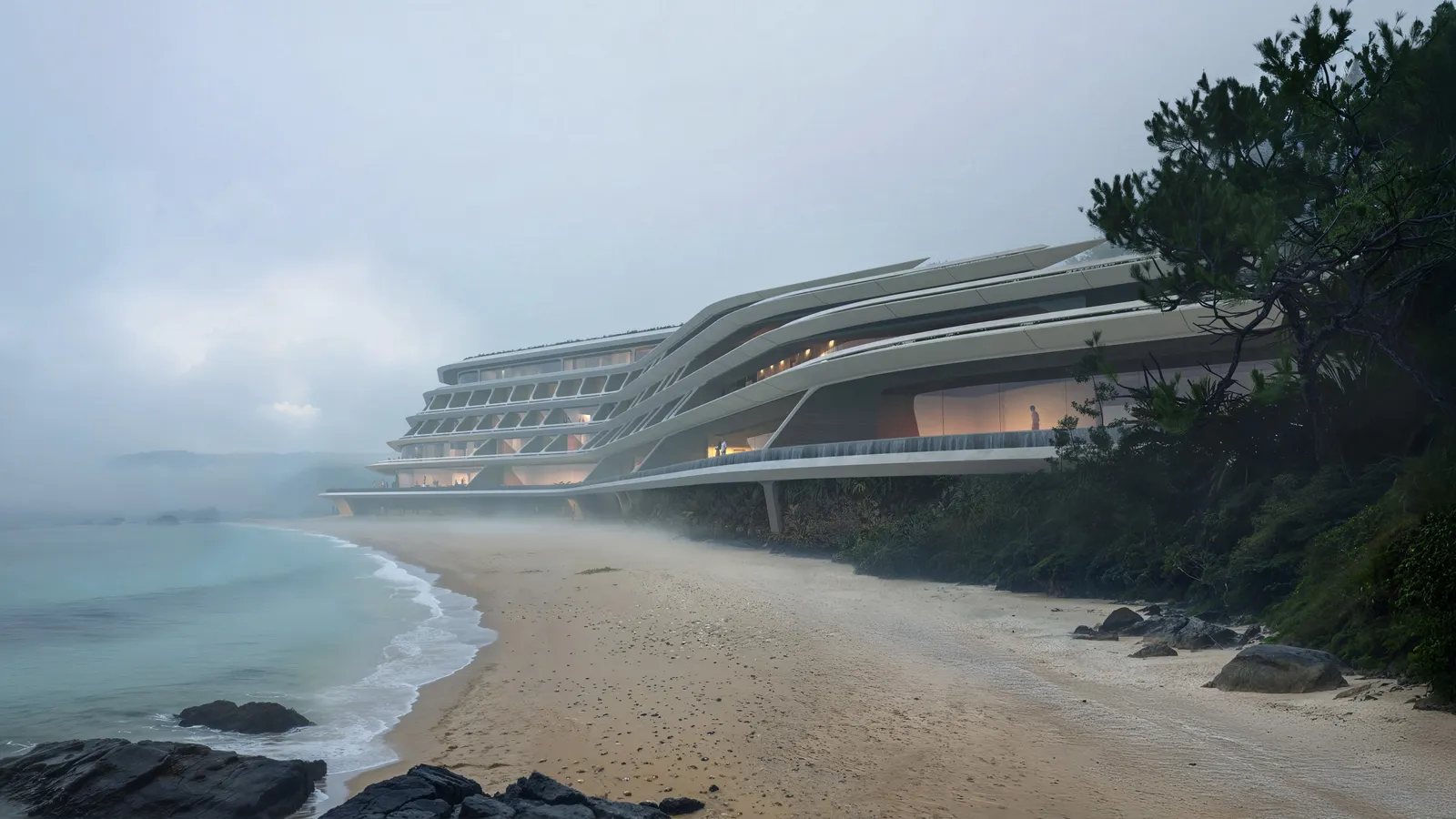
Zaha Hadid Architects prove once again that the art of building is actually about shaping experiences, not just buildings. In designing a retreat for Not A Hotel, the studio has amalgamated curvilinear futurism with the breezy laid-backness of Okinawa’s subtropical coastlines. The result is a retreat that looks into the future and is also deeply entrenched in nature and human comfort.
Okinawa as a Design Foundation

First and foremost, Okinawa is not a backdrop but a real determining force. With its soft shores, warm climate, and an abundance of natural light, the island demands sensitive architecture from its build.
Instead of dictating a solid form, Zaha Hadid Architects presents the building to flow effortlessly in the landscape. The retreat seems to grow organically from its site-a smooth landscape contour and an echoing movement of the sea. Architecture then acts as an extension of the environment rather than a visual interruption.
Curvilinear Forms with a Human Touch
The immediate recognizability of ZHA’s signature curves feels here like being calming and organic. Fluid lines instead of sharp contrasts soften the presence of the building through design.
Besides, these curves are functional in their existence: they guide the views towards the ocean, encourage natural ventilation, and invite daylight deep inside the interior spaces. Hence, the architecture is visually expressive and highly responsive to Okinawa’s subtropical climate.
Materiality, Light, and Breathing Spaces
Of importance would be material usage. The modern finish is contrasted with a tone inspired by sand, stone, and sea, thus creating a warm understated atmosphere. This generally avoids the cold feeling that may be associated with Futuristic Architecture.
Also, the indoor-outdoor relationship is deliberately blurred. A succession of large openings, terraces, and open-plan layouts helps light, air, and nature percolate freely through the retreat. Thus, occupants are always conscious of the changing sky, shifting light, and gentle presence of the ocean.
Not a Hotel and the Idea of Living Differently

Core to the project, Okinawa Retreat is an extension of the brand philosophy at Not A Hotel, which probes existing ideas of hospitality and home living. It’s not quite a hotel, nor is it a house per se, but rather something in between.
The architecture of ZHA hereby becomes a tool for experience within this framework. The spaces offer privacy without isolation, luxury without excess, comfort without formality. Each area is designed to support rest, creativity, and reflection-the qualities increasingly valued in contemporary life.
Architecture for All Ages
The Okinawa Retreat is especially interesting because it attracts a wide range of audiences. The futuristic-sounding vocabulary used in its naming could speak volumes to the sentiments of younger generations, whereas older visitors might appreciate the serenity and clarity of its spaces.
This is because the design achieves the right balance, focusing on people’s feelings inside the architecture. The spaces are intuitive and inviting, easy to live in. In other words, the building does not ask to be admired from a distance—it invites people to live in it.
Final Thoughts: A Continuing Legacy of Vision
In conclusion, the Okinawa Retreat by Zaha Hadid Architects stands as a thoughtful example of how futuristic design can coexist with nature and human needs. It is much more than just an architectural statement; rather, this is an environment meticulously contrived through context, climate, and emotion. ZHA brings fluid forms, a sensitive response to the subtropical landscape, and a contemporary vision of living together to again show that the architectural legacy of Zaha Hadid keeps on evolving-remaining as relevant, expressive, and deeply human as ever.

